


Can an Ordinary Pressure Gauge be Used in a Cement Industry?
As a supplier of Ordinary Pressure Gauge, I often get asked whether our ordinary pressure gauges can be used in the cement industry. This is a valid question considering the unique and often harsh operating conditions in cement production. In this blog post, I'll delve into the aspects of using ordinary pressure gauges in the cement industry, weighing the pros and cons, and providing insights to help make an informed decision.
Understanding the Cement Industry Environment
The cement industry is characterized by high - temperature, high - dust, and high - vibration environments. Cement production involves processes like raw material grinding, clinker burning in kilns, and cement grinding. During these processes, pressure monitoring is crucial at various points, such as in air compressors, hydraulic systems, and in the monitoring of pressure in pipelines carrying raw materials or finished products.
High temperatures in the kiln area can reach several hundred degrees Celsius. The dust generated from the grinding and handling of raw materials and cement is extremely fine and abrasive. Vibration is also a constant factor due to the operation of heavy machinery like crushers, mills, and conveyors.
Capabilities of Ordinary Pressure Gauges
Ordinary pressure gauges are designed for general - purpose pressure measurement in a wide range of industries. They are relatively simple in construction, typically consisting of a Bourdon tube, a movement mechanism, and a dial. These gauges are cost - effective and widely available.

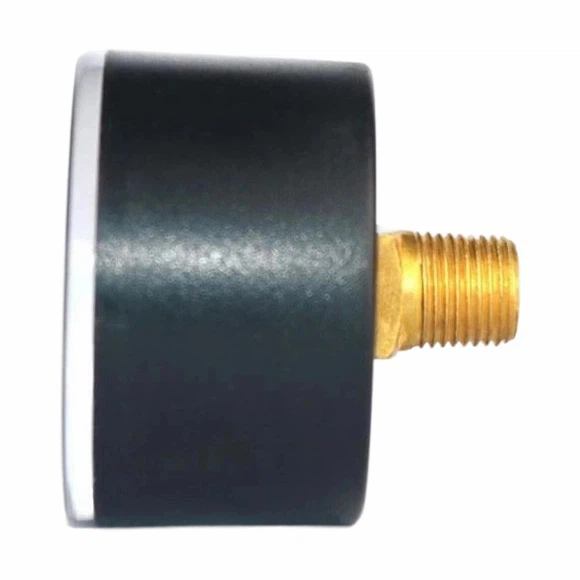
Ordinary Pressure Gauge can accurately measure pressure within their specified range under normal operating conditions. They are suitable for applications where the pressure is relatively stable, and the environment is not overly harsh. For example, in a simple air - pressure monitoring system in a workshop, an ordinary pressure gauge can provide reliable readings.
Challenges of Using Ordinary Pressure Gauges in the Cement Industry
- High - Temperature Resistance: Most ordinary pressure gauges are designed to operate within a limited temperature range, usually up to around 60 - 80 degrees Celsius. In the cement industry, especially near the kiln area, the temperature can far exceed this limit. High temperatures can cause the Bourdon tube to expand and deform, leading to inaccurate pressure readings. Additionally, the lubricants and other internal components of the gauge may break down at high temperatures, reducing the gauge's lifespan.
- Dust and Abrasion: The fine dust in the cement industry can penetrate the gauge through small openings or seals. Once inside, the dust can accumulate on the movement mechanism and the Bourdon tube, causing friction and wear. This can lead to erratic pointer movement and eventually, gauge failure. The abrasive nature of the cement dust can also scratch the glass face of the gauge, making it difficult to read the pressure values.
- Vibration Resistance: Continuous vibration in the cement plant can cause the internal components of an ordinary pressure gauge to loosen or break. The movement mechanism may become misaligned, and the Bourdon tube can fatigue over time. This can result in inaccurate readings and a shorter service life for the gauge.
Situations Where Ordinary Pressure Gauges May Be Suitable
Despite the challenges, there are some situations in the cement industry where ordinary pressure gauges can be used.
- Low - Temperature and Low - Vibration Areas: In areas of the cement plant where the temperature is relatively low, such as in some administrative or storage areas, and the vibration is minimal, ordinary pressure gauges can function properly. For example, in a small air - conditioning system in an office within the cement plant, an ordinary pressure gauge can be used to monitor the refrigerant pressure.
- Non - Critical Applications: In applications where the pressure measurement is not critical for the overall operation of the plant, an ordinary pressure gauge may be sufficient. For instance, in a secondary water - supply system where the pressure only needs to be monitored for general awareness, an ordinary gauge can provide a basic indication of the pressure level.
Alternatives to Ordinary Pressure Gauges in the Cement Industry
If the operating conditions in the cement industry are too harsh for ordinary pressure gauges, there are alternative options available.
- Pressure Measuring Pressure Gauge: These gauges are designed to be more robust and can withstand higher temperatures, dust, and vibration. They may have special coatings or seals to prevent dust ingress and are built with materials that can handle high - temperature environments.
- Painted Steel Gas Pressure Gauge: Painted steel gas pressure gauges are often more resistant to corrosion and abrasion. They can be a good choice for applications in the cement industry where the gauge is exposed to a corrosive or abrasive environment.
Conclusion
In conclusion, while ordinary pressure gauges have their limitations in the cement industry due to the high - temperature, high - dust, and high - vibration environment, they can still be used in certain non - critical and less - harsh areas. However, for critical applications and areas with extreme conditions, it is advisable to consider more specialized pressure gauges.
As a supplier of Ordinary Pressure Gauge, I understand the importance of providing the right solution for your specific needs. If you are in the cement industry and need pressure gauges, I encourage you to contact me for a detailed discussion. We can analyze your requirements and determine whether an ordinary pressure gauge is suitable or if an alternative option would be more appropriate. Our team of experts is ready to assist you in making the best choice for your pressure - measurement needs.
References
- "Industrial Pressure Gauges: Principles and Applications" - A comprehensive guide on pressure gauges and their use in various industries.
- "Cement Manufacturing Processes and Equipment" - A technical resource that details the operating conditions in the cement industry.


