


Hey there! As a supplier of general pressure gauges, I often get asked about how to convert the measurement units of these handy devices. It's a crucial skill, especially when dealing with different systems and international standards. So, let's dive right in and explore the ins and outs of unit conversion for general pressure gauges.
First off, let's understand why we need to convert measurement units. Different industries and regions around the world use various units to measure pressure. For instance, in the United States, pounds per square inch (psi) is a commonly used unit, while in Europe, kilopascals (kPa) and bars are more prevalent. If you're working on a project that involves international partners or using equipment from different countries, you'll likely need to convert between these units.
Now, let's talk about some of the most common pressure units and how to convert between them. The most widely used units are psi, kPa, bars, and atmospheres (atm). Here are the conversion factors you need to know:
- 1 psi = 6.89476 kPa
- 1 kPa = 0.145038 psi
- 1 bar = 100 kPa
- 1 bar = 14.5038 psi
- 1 atm = 101.325 kPa
- 1 atm = 14.6959 psi
Let's say you have a pressure reading of 50 psi and you want to convert it to kPa. You simply multiply the psi value by the conversion factor: 50 psi * 6.89476 kPa/psi = 344.738 kPa. Easy, right?
Conversely, if you have a pressure reading of 200 kPa and you want to convert it to psi, you divide the kPa value by the conversion factor: 200 kPa / 6.89476 kPa/psi = 29.0075 psi.
Now, let's take a look at some of the general pressure gauges we offer. We have a wide range of options to suit different needs and applications. For example, our 1.5" Water Pressure General Pressure Gauge is perfect for measuring water pressure in residential and commercial plumbing systems. It's accurate, reliable, and easy to read.
If you're looking for a more conventional option, our Conventional Pressure Gauge is a great choice. It's suitable for a variety of applications, including industrial processes, HVAC systems, and automotive applications.
For those working with gas pressure, our Painted Steel Gas Pressure Gauge is designed to withstand the rigors of gas measurement. It's made of high-quality materials and features a durable painted steel case.
When it comes to converting the measurement units on these gauges, it's important to note that most modern pressure gauges come with multiple scales. This means you can read the pressure in different units without having to do any manual conversions. However, if you need to convert a reading from one unit to another, you can use the conversion factors we discussed earlier.
In addition to the conversion factors, there are also some online tools and apps available that can make the conversion process even easier. These tools allow you to simply enter the pressure value and select the units you want to convert from and to, and they'll do the calculations for you.
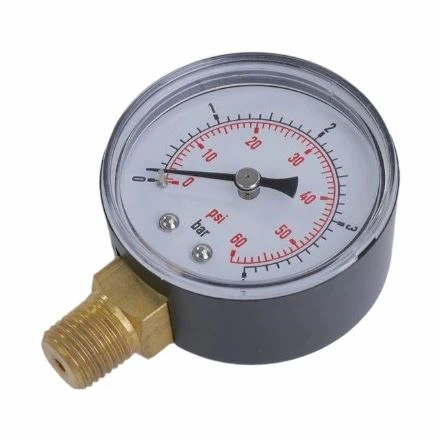
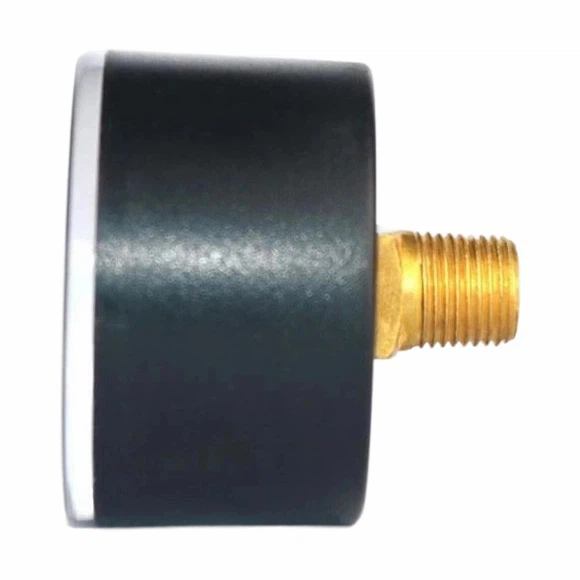
Another thing to keep in mind is that some pressure gauges may have a limited range of units available on their scales. In these cases, you may need to use an external conversion device or a calculator to convert the readings.
Finally, I want to encourage you to reach out to us if you have any questions or need further assistance with pressure gauge unit conversion or if you're interested in purchasing our general pressure gauges. We have a team of experts who are always ready to help you find the right solution for your needs. Whether you're a small business owner, a DIY enthusiast, or a large industrial company, we can provide you with the high-quality pressure gauges and support you need.
So, don't hesitate to get in touch and start a conversation about your pressure measurement requirements. We look forward to working with you!
References:
- Engineering ToolBox. (n.d.). Pressure - Conversion Factors. Retrieved from https://www.engineeringtoolbox.com/pressure-conversion-d_583.html
- Wikipedia. (n.d.). Pressure. Retrieved from https://en.wikipedia.org/wiki/Pressure


