


Hey there! As a supplier of Balloon Inflation Pressure Gauges, I've had my fair share of folks reaching out with questions about how to make sense of the readings on these nifty devices. So, I thought I'd put together this blog post to break it all down for you in a way that's easy to understand.
First off, let's talk about what a Balloon Inflation Pressure Gauge actually is. It's a tool that measures the pressure inside a balloon during inflation. This is super important, especially in medical settings where precise pressure control is crucial. For example, in angioplasty procedures, a balloon catheter is inflated inside a blocked artery, and the pressure needs to be just right to open up the artery without causing damage.
Now, onto interpreting the readings. Most Balloon Inflation Pressure Gauges have a scale that shows the pressure in units like atmospheres (atm), pounds per square inch (psi), or millimeters of mercury (mmHg). Let's take a closer look at each of these units.
Atmospheres (atm) are a common unit used in medical applications. One atmosphere is equal to the average pressure exerted by the Earth's atmosphere at sea level, which is about 14.7 psi or 760 mmHg. When you're using a Medical Supply 30 ATM, it can measure pressures up to 30 times the atmospheric pressure. This is useful for tasks that require high-pressure inflation, like inflating large balloons or performing certain medical procedures.
Pounds per square inch (psi) is another unit you might come across. It's a measure of the force applied per square inch of area. In the context of balloon inflation, psi tells you how much pressure is being exerted on the inside of the balloon. If you're used to working with tools that use psi, it can be helpful to have a gauge that displays readings in this unit.
Millimeters of mercury (mmHg) is a unit commonly used in the medical field to measure blood pressure. It's based on the height of a column of mercury in a glass tube. When measuring balloon inflation pressure, mmHg can give you a precise reading of the pressure inside the balloon.

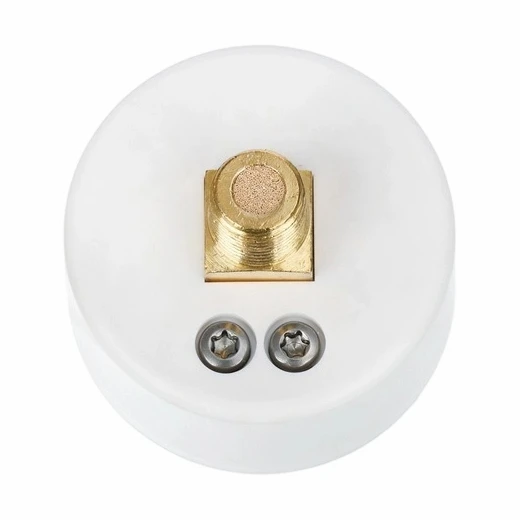
So, how do you actually read the gauge? Well, it's pretty straightforward. Most gauges have a needle that moves along the scale as the pressure changes. As the balloon inflates, the needle will move towards higher pressure values. To get an accurate reading, make sure the gauge is properly calibrated and that you're reading the scale at eye level.
It's also important to note that different types of balloons may require different inflation pressures. For example, a small balloon used in a medical device may only need a few atmospheres of pressure, while a larger balloon used for a scientific experiment may require much higher pressures. Always refer to the manufacturer's instructions for the recommended inflation pressure for your specific balloon.
Another thing to keep in mind is that the reading on the gauge may not always be exactly the same as the pressure inside the balloon. There can be some small variations due to factors like the elasticity of the balloon material and the resistance of the inflation system. To get the most accurate reading, it's a good idea to take multiple readings and average them out.
Now, let's talk about some common issues you might encounter when using a Balloon Inflation Pressure Gauge. One of the most common problems is a stuck or inaccurate needle. This can be caused by a variety of factors, such as dirt or debris in the gauge, a damaged spring, or a problem with the internal mechanism. If you notice that the needle is not moving smoothly or is giving inconsistent readings, it's a good idea to have the gauge checked by a professional.
Another issue is overinflation. This can happen if you're not paying close attention to the gauge reading or if you're using too much pressure. Overinflating a balloon can cause it to burst, which can be dangerous, especially in a medical setting. To avoid overinflation, always follow the recommended inflation pressure and keep an eye on the gauge as you're inflating the balloon.
In conclusion, interpreting the readings of a Balloon Inflation Pressure Gauge is an important skill, especially if you're working in a medical or scientific field. By understanding the different units of measurement, how to read the gauge, and some common issues to watch out for, you can ensure that you're using the gauge correctly and getting accurate readings.
If you're in the market for a high-quality Balloon Inflation Pressure Gauge, be sure to check out our Balloon Inflation Pressure Gauge and Medical Balloon Pressure Gauge Bottom Connection products. We offer a wide range of gauges to suit your needs, and our team of experts is always available to answer any questions you may have.
If you're interested in purchasing our products or have any questions about our Balloon Inflation Pressure Gauges, feel free to reach out to us. We're here to help you find the right solution for your needs.
References:
- Medical textbooks on pressure measurement and medical device operation
- Manufacturer's instructions for Balloon Inflation Pressure Gauges


