


Hey there! I'm a supplier of General Medical Pressure Gauges, and I know how crucial it is to keep these devices working smoothly. One major headache that can mess with their performance is electromagnetic interference (EMI). In this blog, I'll share some practical tips on how to protect a general medical pressure gauge from EMI.
Understanding Electromagnetic Interference
First off, let's get a handle on what EMI is. EMI is basically the disruption caused by electromagnetic radiation on an electrical circuit. It can come from all sorts of sources, like power lines, radio transmitters, and even other electronic devices in the vicinity. When a medical pressure gauge is exposed to EMI, it can lead to inaccurate readings, malfunctions, or even permanent damage.
Shielding the Gauge
One of the most effective ways to protect a medical pressure gauge from EMI is through shielding. Shielding involves enclosing the gauge in a conductive material that blocks or redirects electromagnetic waves.
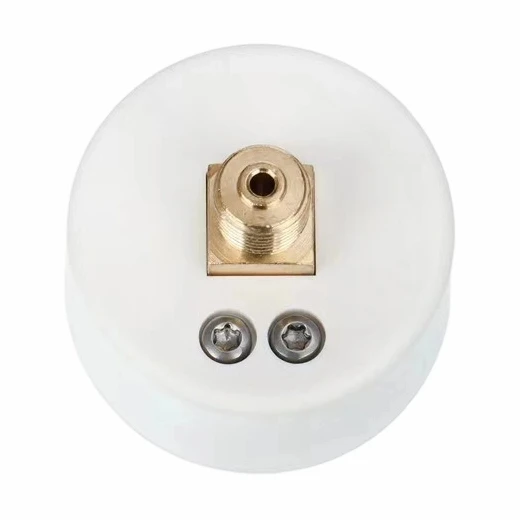

Metal Enclosures
A common method is to use a metal enclosure for the pressure gauge. Metals like aluminum and steel are great conductors and can act as a Faraday cage. A Faraday cage is a shielded enclosure that blocks external electric fields. When you place the medical pressure gauge inside a metal box, the metal absorbs and redistributes the electromagnetic energy around the outside of the box, keeping the gauge inside safe from interference.
For example, we offer the 30 ATM Medical Pressure Gauge, which comes with a high - quality metal enclosure. This enclosure not only provides mechanical protection but also shields the gauge from EMI, ensuring accurate and reliable pressure measurements.
Conductive Coatings
Another option is to apply conductive coatings to the gauge or its housing. These coatings are made of materials like conductive polymers or metal - filled paints. They create a thin conductive layer that can absorb and dissipate electromagnetic energy. Conductive coatings are a great choice when you need a lightweight and cost - effective shielding solution.
Grounding
Proper grounding is essential for protecting medical pressure gauges from EMI. Grounding provides a path for the electrical current generated by the electromagnetic interference to flow safely into the ground, rather than interfering with the gauge's internal circuitry.
Direct Grounding
The gauge should be directly connected to a good ground source. This can be a dedicated grounding rod or a building's grounding system. Make sure the grounding connection is secure and has low resistance. A loose or high - resistance ground connection can reduce the effectiveness of the grounding and still allow EMI to affect the gauge.
Grounding Cables
Using high - quality grounding cables is also important. These cables should be properly sized to handle the electrical current that may be generated by the EMI. We recommend using cables with a low impedance to ensure efficient grounding.
Filtering
Filtering is another technique to protect medical pressure gauges from EMI. Filters can be used to block or reduce the unwanted electromagnetic frequencies while allowing the desired signals to pass through.
EMI Filters
EMI filters are specifically designed to remove electromagnetic interference from electrical circuits. They can be installed between the power supply and the pressure gauge. These filters work by using capacitors, inductors, and resistors to create a circuit that attenuates the EMI frequencies.
For instance, our 30 ATM Pressure Gauge for Medical Balloon can be paired with an appropriate EMI filter to enhance its resistance to electromagnetic interference. This combination ensures that the gauge operates accurately even in environments with high levels of EMI.
Power Line Filters
Power line filters are also useful. They are designed to clean up the electrical power supplied to the gauge. Power lines can carry a lot of electromagnetic noise, and a power line filter can remove this noise before it reaches the gauge.
Isolation
Isolating the medical pressure gauge from other electronic devices can also help reduce EMI. When multiple electronic devices are placed close together, they can generate and receive electromagnetic signals that interfere with each other.
Physical Separation
Try to keep the pressure gauge away from other electronic equipment, especially those that generate strong electromagnetic fields, such as MRI machines, radio transmitters, and large motors. A good rule of thumb is to maintain a distance of at least a few feet between the gauge and other potentially interfering devices.
Electrical Isolation
In addition to physical separation, electrical isolation can be used. This can be achieved through the use of isolation transformers or opto - isolators. Isolation transformers transfer electrical power from one circuit to another without a direct electrical connection, which can block EMI. Opto - isolators use light to transfer signals between circuits, providing electrical isolation and reducing the risk of EMI.
Choosing the Right Location
The location where you install the medical pressure gauge can have a big impact on its susceptibility to EMI.
Low - EMI Environments
Try to install the gauge in an area with low electromagnetic activity. Avoid areas near power lines, electrical panels, and large electrical equipment. If possible, place the gauge in a shielded room or a location that is naturally protected from EMI.
Avoiding Reflections
Be aware of potential electromagnetic reflections. Metallic surfaces can reflect electromagnetic waves, increasing the chances of interference. Try to avoid installing the gauge near large metal objects or reflective surfaces.
Regular Maintenance and Testing
Regular maintenance and testing are crucial to ensure that the medical pressure gauge remains protected from EMI.
Inspection
Periodically inspect the gauge's shielding, grounding, and filtering components. Look for signs of damage, corrosion, or loose connections. Any issues should be addressed immediately to maintain the gauge's protection against EMI.
Testing
Conduct regular EMI testing on the gauge. This can involve using specialized equipment to measure the level of electromagnetic interference and the gauge's performance in the presence of EMI. If the gauge fails the EMI test, it may need to be recalibrated or repaired.
Our Medical Pressure Gauge Luminous Dial undergoes rigorous EMI testing during the manufacturing process to ensure its reliability. However, regular in - field testing is still recommended to catch any potential issues over time.
Conclusion
Protecting a general medical pressure gauge from electromagnetic interference is essential for accurate and reliable performance. By using shielding, grounding, filtering, isolation, choosing the right location, and performing regular maintenance and testing, you can significantly reduce the risk of EMI affecting your gauge.
If you're in the market for high - quality medical pressure gauges that are designed to withstand electromagnetic interference, we're here to help. Whether you need a 30 ATM Medical Pressure Gauge, a 30 ATM Pressure Gauge for Medical Balloon, or a Medical Pressure Gauge Luminous Dial, we've got you covered. Contact us to discuss your specific requirements and let's start a great partnership for your medical pressure gauge needs.
References
- "Electromagnetic Compatibility Engineering" by Henry W. Ott
- "Medical Device Electromagnetic Compatibility: Design and Compliance" by Steven W. Ellingson


