


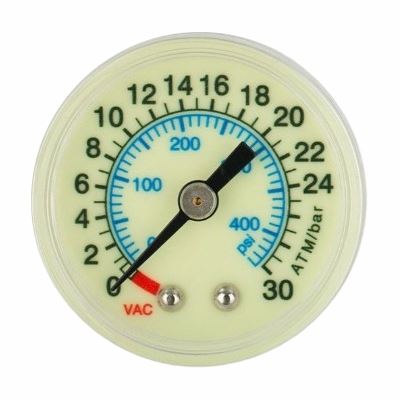
As a supplier of Medical Equipment Pressure Gauges, I understand the critical role these instruments play in the healthcare industry. Medical equipment pressure gauges are essential for ensuring the safe and effective operation of various medical devices, from simple hand-held syringes to complex life-support systems. In this blog post, I will discuss the maintenance requirements for medical equipment pressure gauges, highlighting the importance of regular upkeep and providing practical tips for ensuring their accuracy and reliability.

Importance of Maintenance
Medical equipment pressure gauges are precision instruments that require regular maintenance to ensure their accuracy and reliability. Inaccurate pressure readings can lead to serious consequences, including incorrect dosages of medications, improper inflation of medical balloons, and malfunction of life-support equipment. Therefore, it is crucial to follow a strict maintenance schedule to prevent these issues and ensure the safety of patients.
Regular maintenance also helps to extend the lifespan of medical equipment pressure gauges. By keeping the gauges clean, lubricated, and calibrated, you can prevent wear and tear on the internal components, reducing the risk of breakdowns and costly repairs. Additionally, proper maintenance can help to identify potential problems early on, allowing you to address them before they become major issues.
Maintenance Requirements
Cleaning
One of the most important maintenance tasks for medical equipment pressure gauges is cleaning. Over time, dirt, dust, and other contaminants can accumulate on the gauge face and internal components, affecting their accuracy and performance. To clean a pressure gauge, you should use a soft, lint-free cloth and a mild cleaning solution. Avoid using abrasive cleaners or solvents, as these can damage the gauge face and internal components.
When cleaning the gauge face, be sure to remove any debris or smudges that may be obscuring the readings. You can use a small brush or compressed air to clean the crevices and hard-to-reach areas. For the internal components, you may need to disassemble the gauge and clean them individually. However, this should only be done by a qualified technician, as improper disassembly can damage the gauge.
Lubrication
Proper lubrication is essential for ensuring the smooth operation of medical equipment pressure gauges. Over time, the moving parts of the gauge can become dry and worn, leading to increased friction and inaccurate readings. To prevent this, you should lubricate the gauge regularly using a high-quality lubricant.
When lubricating the gauge, be sure to use the correct type of lubricant for the specific gauge model. Some gauges may require a special lubricant that is designed for use in medical applications. You should also follow the manufacturer's instructions for lubrication, as over-lubrication can also cause problems.
Calibration
Calibration is the process of adjusting a pressure gauge to ensure its accuracy. Over time, the internal components of a gauge can become worn or damaged, leading to inaccurate readings. To ensure the accuracy of your pressure gauges, you should calibrate them regularly using a calibrated reference gauge.
The frequency of calibration will depend on the specific gauge model and its intended use. Some gauges may require calibration as often as once a month, while others may only need to be calibrated once a year. You should follow the manufacturer's recommendations for calibration frequency and use a qualified technician to perform the calibration.
Inspection
Regular inspection is another important maintenance task for medical equipment pressure gauges. During an inspection, you should check the gauge for any signs of damage or wear, such as cracks, leaks, or loose connections. You should also check the gauge face for any signs of fading or damage, as this can affect the readability of the gauge.
If you notice any signs of damage or wear during an inspection, you should replace the gauge immediately. Using a damaged or worn gauge can lead to inaccurate readings and potentially dangerous situations.
Tips for Maintenance
Keep a Maintenance Log
Keeping a maintenance log is a great way to track the maintenance history of your medical equipment pressure gauges. In the log, you should record the date of each maintenance task, the type of maintenance performed, and the results of any calibration or inspection. This will help you to ensure that the gauges are being maintained on a regular basis and will provide a record of the gauge's maintenance history for future reference.
Train Your Staff
Proper maintenance of medical equipment pressure gauges requires knowledge and skill. Therefore, it is important to train your staff on the proper maintenance procedures for the gauges. This will help to ensure that the gauges are being maintained correctly and will reduce the risk of damage or malfunction.
Use High-Quality Parts
When replacing parts on your medical equipment pressure gauges, it is important to use high-quality parts that are designed for use in medical applications. Using low-quality parts can lead to inaccurate readings and potentially dangerous situations. You should also follow the manufacturer's recommendations for parts replacement and use a qualified technician to perform the replacement.
Store the Gauges Properly
Proper storage is also important for maintaining the accuracy and reliability of medical equipment pressure gauges. When not in use, the gauges should be stored in a clean, dry place away from direct sunlight and extreme temperatures. You should also protect the gauges from dust, dirt, and other contaminants by covering them with a protective case or bag.
Conclusion
In conclusion, proper maintenance of medical equipment pressure gauges is essential for ensuring their accuracy and reliability. By following a strict maintenance schedule that includes cleaning, lubrication, calibration, and inspection, you can prevent problems and ensure the safety of patients. Additionally, by keeping a maintenance log, training your staff, using high-quality parts, and storing the gauges properly, you can extend the lifespan of the gauges and reduce the risk of breakdowns and costly repairs.
If you are in the market for high-quality Medical Equipment Pressure Gauges, look no further. We offer a wide range of pressure gauges, including the 30 ATM Pressure Gauge for Medical Balloon and the General Medical Pressure Gauge, all designed to meet the highest standards of quality and performance. If you have any questions or would like to discuss your specific needs, please feel free to contact us for a detailed discussion and potential purchase.
References
- Manufacturer's manuals for medical equipment pressure gauges
- Industry standards and guidelines for medical equipment maintenance
- Professional literature on medical equipment calibration and inspection


