


Medical use pressure gauges play a crucial role in various healthcare applications, from monitoring blood pressure to ensuring the proper functioning of medical equipment. As a supplier of medical use pressure gauges, I am often asked about the materials used in their construction. In this blog post, I will explore the different materials commonly employed in making these essential medical devices.
Housing Materials
The housing of a medical use pressure gauge serves as a protective shell, safeguarding the internal components from damage and environmental factors. One of the most commonly used materials for gauge housings is stainless steel. Stainless steel is highly resistant to corrosion, making it ideal for use in medical settings where the gauges may come into contact with moisture, cleaning agents, or bodily fluids. It also offers excellent durability, ensuring that the gauge can withstand the rigors of daily use in a healthcare environment.
Another popular material for gauge housings is plastic. Plastic housings are lightweight, cost - effective, and can be easily molded into various shapes and sizes. They are often used in applications where weight is a concern or where a more affordable option is required. However, it is important to choose a high - quality plastic that is resistant to cracking, chemical damage, and UV radiation. Polycarbonate is a common choice for plastic gauge housings due to its excellent impact resistance and clarity.
Dial Materials
The dial of a medical use pressure gauge provides the user with a visual indication of the pressure being measured. Glass is a traditional material used for gauge dials. It offers excellent clarity, allowing for easy reading of the pressure values. Glass is also resistant to scratching and chemical damage, ensuring that the dial remains legible over time. However, glass can be brittle and may break if the gauge is dropped or subjected to excessive force.
Acrylic is another material used for gauge dials. It is lighter and more shatter - resistant than glass, making it a safer option in some applications. Acrylic dials can also be easily customized with different colors, markings, and graphics. For medical use pressure gauges with special requirements, such as low - light conditions, Medical Pressure Gauge Luminous Dial are available. These gauges feature a dial with a luminous coating that allows for easy reading in the dark.
Movement Materials
The movement of a pressure gauge is the internal mechanism that converts the pressure being measured into a mechanical or electrical signal. The most common material used for the movement's springs is phosphor bronze. Phosphor bronze has excellent elasticity and corrosion resistance, which ensures accurate and reliable pressure measurement over a long period. It can withstand repeated cycles of compression and expansion without losing its shape or performance.
Brass is also used in some parts of the movement, such as the gears and linkages. Brass is easy to machine, has good wear resistance, and provides a reliable connection between different components of the movement. In addition, some modern medical use pressure gauges use electronic sensors instead of mechanical movements. These sensors are often made from materials such as silicon, which can accurately detect pressure changes and convert them into electrical signals for display.
Connection Materials
The connections of a medical use pressure gauge are used to attach the gauge to the pressure source or other components of the medical system. Stainless steel is a common material for pressure gauge connections due to its corrosion resistance and strength. It can be used for both threaded and flanged connections, ensuring a secure and leak - free connection.
For applications where a more flexible connection is required, rubber or silicone may be used. Rubber and silicone connections can absorb vibrations and provide a tight seal, preventing any pressure leaks. They are often used in applications where the pressure source is subject to movement or where a more forgiving connection is needed.
Diaphragm Materials
In some medical use pressure gauges, diaphragms are used to measure pressure. Diaphragms are thin, flexible membranes that deform under pressure, and this deformation is then translated into a pressure reading. Stainless steel diaphragms are commonly used due to their durability and corrosion resistance. They can withstand high pressures and are suitable for a wide range of medical applications.
For applications where a more sensitive diaphragm is required, materials such as rubber or PTFE (polytetrafluoroethylene) may be used. Rubber diaphragms are flexible and can respond to small pressure changes, making them ideal for low - pressure applications. PTFE diaphragms, on the other hand, are resistant to chemicals and high temperatures, making them suitable for use in harsh medical environments.
Case Study: 30 ATM Medical Pressure Gauge
Our 30 ATM Medical Pressure Gauge is a prime example of how different materials work together to create a high - performance medical device. The housing of this gauge is made of high - grade stainless steel, providing excellent protection against corrosion and physical damage. The dial is made of tempered glass, ensuring clear and accurate reading of the pressure values even under high - pressure conditions.
The movement of the 30 ATM gauge uses phosphor bronze springs for accurate pressure measurement, and the connections are made of stainless steel to ensure a secure and leak - free connection. The diaphragm, which is responsible for detecting the pressure, is made of a specially designed stainless steel alloy that can withstand the high pressures associated with this gauge.
Case Study: Medical Balloon Pressure Gauge Back Connection
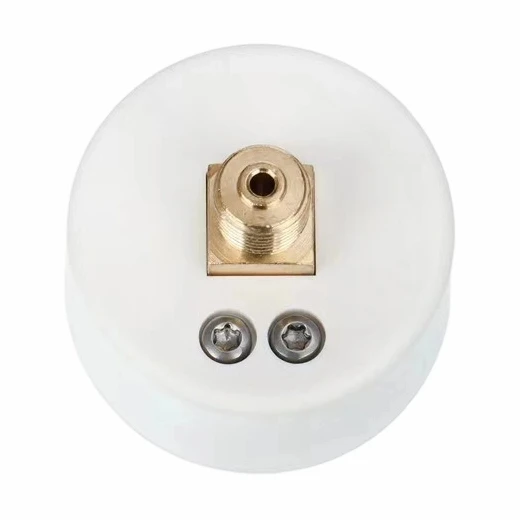
Our Medical Balloon Pressure Gauge Back Connection is designed for use in balloon catheter systems. The housing of this gauge is made of a lightweight plastic, which is easy to handle and suitable for use in a clinical setting. The dial is made of acrylic, providing a clear view of the pressure readings.
The movement of the medical balloon pressure gauge uses brass gears and phosphor bronze springs to ensure accurate and reliable pressure measurement. The back connection is made of rubber, which provides a flexible and secure connection to the balloon catheter. This allows for easy adjustment and ensures that the gauge can be used effectively in different medical procedures.
Conclusion
As a supplier of medical use pressure gauges, I understand the importance of using high - quality materials in the construction of these devices. The choice of materials depends on various factors, such as the application, the pressure range, the environment in which the gauge will be used, and the cost. By carefully selecting the right materials for each component of the pressure gauge, we can ensure that our products are accurate, reliable, and durable.
If you are in the market for medical use pressure gauges, I encourage you to contact us to discuss your specific requirements. We have a wide range of products available, and our team of experts can help you choose the right gauge for your application. Whether you need a standard gauge or a custom - designed solution, we are committed to providing you with the highest quality products and excellent customer service.

References
- ASME B40.100 - 2013, Pressure Gauges and Gauge Attachments
- ISO 10012:2003, Measurement management systems - Requirements for measurement processes and measuring equipment
- ASTM standards related to materials used in pressure gauges


