


A painted steel gas pressure gauge is a crucial instrument in various industrial and commercial applications, designed to accurately measure and display the pressure of gases within a system. As a supplier of painted steel gas pressure gauges, I understand the importance of appearance design in not only enhancing the functionality but also the aesthetic appeal and usability of these instruments. In this blog, I will delve into the key appearance design features of a painted steel gas pressure gauge.
Material and Finish
The primary material of a painted steel gas pressure gauge is, as the name suggests, steel. Steel offers excellent durability and strength, making it suitable for withstanding the harsh conditions often encountered in industrial environments. The steel body is then painted, which serves multiple purposes. Firstly, the paint provides a protective layer that prevents corrosion and rust, extending the lifespan of the gauge. Secondly, it allows for customization in terms of color. Different colors can be chosen to match the overall color scheme of the equipment or the industrial facility where the gauge will be installed. For example, a bright color like yellow or orange can be used for gauges in safety - critical applications to make them more visible and easily distinguishable.
Dial Design
The dial is the most prominent part of the pressure gauge, as it is where the pressure readings are displayed. The appearance design of the dial is carefully crafted to ensure readability.
Scale and Markings
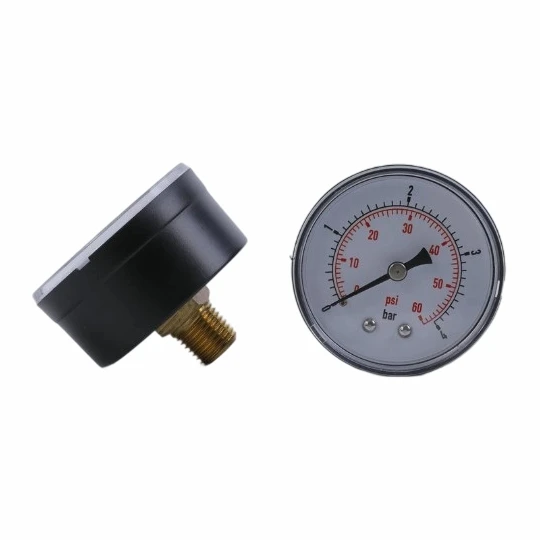
The scale on the dial is calibrated to accurately represent the pressure range of the gauge. The markings are clear and distinct, with evenly spaced graduations. Numbers are large enough to be read from a reasonable distance, and they are often printed in a high - contrast color against the background of the dial. For example, black numbers on a white background are a common and effective combination. In addition to the numerical markings, there may be additional symbols or indicators. For instance, a red line or zone may be marked on the dial to indicate the maximum safe operating pressure.
Pointer
The pointer is a crucial element for indicating the current pressure value. It is typically made of a thin, lightweight material such as aluminum or plastic. The design of the pointer is streamlined to minimize parallax error, which occurs when the observer's line of sight is not perpendicular to the dial. A well - designed pointer has a sharp tip that can accurately point to the pressure markings on the dial. Some pointers are also illuminated, especially in applications where the gauge may be used in low - light conditions. This ensures that the pressure reading can be easily seen at all times.
Case Design
The case of the painted steel gas pressure gauge encloses and protects the internal components. Its design is focused on both functionality and aesthetics.
Shape and Size
The shape of the case can vary depending on the application and the user's requirements. Common shapes include circular, rectangular, and square. Circular cases are the most traditional and widely used, as they provide a uniform and balanced appearance. The size of the case is also an important consideration. Smaller gauges are suitable for applications where space is limited, such as in compact machinery or control panels. Larger gauges, on the other hand, are often used in industrial settings where a clear and visible pressure reading is required from a distance.
Window
The window of the case is made of a transparent material, usually glass or plastic. Glass windows offer high clarity and scratch resistance, but they may be more fragile. Plastic windows, on the other hand, are more impact - resistant and lightweight. The window is designed to be flush with the case to prevent dirt and moisture from accumulating around the edges. It also provides a clear view of the dial and pointer, allowing for easy reading of the pressure.
Connection Design
The connection design of the painted steel gas pressure gauge is essential for its proper installation and operation.
Type of Connection
There are different types of connections available, such as threaded connections, flange connections, and quick - connect fittings. Threaded connections are the most common, as they are easy to install and provide a secure seal. The thread size and type are standardized to ensure compatibility with different piping systems. For example, a 1/4 - inch NPT (National Pipe Thread) connection is a common size used in many industrial applications.
Orientation
The orientation of the connection can also affect the appearance and usability of the gauge. Some gauges have a bottom - connection design, which is suitable for vertical piping systems. Others have a back - connection design, which is ideal for mounting on panels or in confined spaces. You can explore our Air Pressure Gauge with Back Connection for more details on this type of connection.
Mounting Options
The appearance design of the painted steel gas pressure gauge also takes into account the mounting options.
Panel Mounting
Panel - mounted gauges are designed to be installed on control panels or equipment surfaces. They usually have a flat back and mounting holes or brackets that allow for easy attachment to the panel. This type of mounting provides a clean and professional look, as the gauge is integrated into the overall design of the panel.
Surface Mounting
Surface - mounted gauges can be attached directly to a flat surface using screws or adhesive. This is a simple and flexible mounting option, suitable for applications where a permanent installation is not required or where the gauge needs to be easily repositioned.
Additional Design Features
Shock and Vibration Resistance
In industrial environments, gauges are often exposed to shock and vibration. To ensure the accuracy and reliability of the pressure readings, many painted steel gas pressure gauges are designed with shock - absorbing features. This may include a liquid - filled case, which helps to dampen the effects of shock and vibration on the internal components. The liquid also provides additional protection against corrosion and extends the lifespan of the gauge.

Weather Resistance
For outdoor applications, gauges need to be weather - resistant. The paint finish on the steel body is designed to withstand exposure to sunlight, rain, and extreme temperatures. The case is also sealed to prevent moisture and dust from entering the gauge, ensuring its proper operation in all weather conditions.
Comparison with Other Types of Pressure Gauges
When compared to other types of pressure gauges, such as 1.5" Water Pressure General Pressure Gauge and Conventional Pressure Gauge, the painted steel gas pressure gauge offers several advantages in terms of appearance design. The painted steel body provides a more robust and durable look, while the customizable paint color allows for better integration with the surrounding environment. The dial and case design of the painted steel gas pressure gauge is also optimized for readability and usability, making it a popular choice in many industrial applications.
Conclusion
The appearance design of a painted steel gas pressure gauge is a combination of functionality, aesthetics, and usability. From the material and finish to the dial, case, connection, and mounting options, every aspect of the design is carefully considered to meet the needs of different applications. As a supplier of painted steel gas pressure gauges, we are committed to providing high - quality products with excellent appearance design. If you are interested in purchasing our painted steel gas pressure gauges or have any questions about our products, please feel free to contact us for further discussion and negotiation.
References
- ASME B40.100 - 2013, Pressure Gauges and Gauge Attachments
- ISO 5167 - 1:2003, Measurement of fluid flow by means of pressure differential devices inserted in circular cross - section conduits running full


