


Hey there! As a supplier of brass pressure gauges, I've been in the thick of the industry for quite some time. One question that pops up a lot is, "What's the difference between a local and an international standard for a brass pressure gauge?" Well, let's dive right in and break it down.
Understanding the Basics
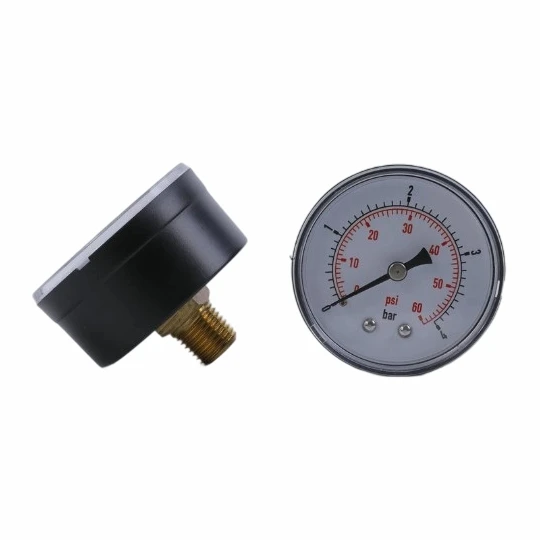
First off, what exactly is a brass pressure gauge? It's a device used to measure the pressure of liquids or gases in a system. Brass is a popular material for these gauges because it's corrosion - resistant, durable, and has good mechanical properties. We offer a range of products like the Air Pressure Gauge with Back Connection, Painted Steel Gas Pressure Gauge, and Low Pressure Natural Gas Gauge.
Local Standards
Local standards for brass pressure gauges are usually set by a particular country or region. These standards take into account the local industry needs, safety regulations, and the general usage patterns of pressure gauges in that area.
Design and Construction
In some regions, local standards might specify the exact dimensions of the pressure gauge. For example, the size of the dial, the length of the pointer, and the thickness of the brass casing. This is often to ensure compatibility with local equipment and installation requirements.
Let's say a local factory has a specific layout for its machinery, and the pressure gauges need to fit into pre - existing spaces. The local standard will dictate the size and shape of the gauge to make this happen. Also, the local standard might require certain markings on the gauge to be in the local language, making it easier for local operators to read and understand.
Safety Requirements
Safety is a big deal when it comes to pressure gauges. Local standards often have strict rules regarding the maximum pressure a gauge can handle and the safety margins that need to be built in. For instance, if a local industry deals with high - pressure gases, the local standard might require pressure gauges to have a higher burst pressure rating to prevent any catastrophic failures.
Certification and Testing
To meet local standards, pressure gauges usually need to go through a series of tests and obtain local certifications. These tests can include pressure tests, accuracy tests, and environmental tests. A local certification body will inspect the manufacturing process and the final product to ensure compliance. This gives local customers the confidence that the pressure gauges they are buying are safe and reliable.
International Standards
International standards, on the other hand, are more about creating a common ground for pressure gauge manufacturers and users around the world. These standards are developed by international organizations like the International Organization for Standardization (ISO).
Global Compatibility
One of the main advantages of international standards is that they allow for global compatibility. A pressure gauge that meets international standards can be used in different countries without any major issues. This is great for multinational companies that operate in multiple locations. They can use the same type of pressure gauge across all their facilities, simplifying inventory management and reducing costs.
Quality and Performance
International standards set high - level requirements for the quality and performance of pressure gauges. They define the accuracy class of the gauge, which indicates how precise the pressure measurement is. For example, an international standard might specify that a pressure gauge should have an accuracy of ±1% of the full - scale reading. This ensures that users around the world can rely on the same level of accuracy when using pressure gauges that meet international standards.
Harmonization of Regulations
By following international standards, countries can harmonize their regulations. This means that there is less confusion for manufacturers who want to sell their products in different markets. Instead of having to comply with a different set of rules in each country, they can focus on meeting a single set of international standards.

Key Differences
Scope
The scope of local standards is limited to a particular country or region, while international standards have a global reach. Local standards are more tailored to the specific needs of the local market, while international standards aim to create a universal benchmark.
Flexibility
Local standards can be more flexible in some cases. Since they are designed for a specific area, they can be adjusted more quickly to adapt to local changes in technology or industry requirements. International standards, on the other hand, take longer to update because they need to be agreed upon by multiple countries.
Complexity
Complying with multiple local standards can be more complex for a manufacturer. They need to understand and meet the requirements of each individual region. International standards, although they are comprehensive, provide a single set of rules that can be followed across the board.
Impact on the Supplier
As a supplier of brass pressure gauges, these differences in standards have a significant impact on our business.
Product Development
We need to be aware of both local and international standards when developing new products. If we want to target a specific local market, we have to make sure our pressure gauges meet the local standards. This might involve making some design changes or adding extra features.
On the other hand, if we want to have a global presence, we need to ensure that our products meet international standards. This allows us to sell our pressure gauges in multiple countries without having to make major modifications for each market.
Marketing and Sales
When marketing our products, we need to highlight the compliance with relevant standards. For local customers, we can emphasize that our pressure gauges meet the local safety and performance requirements. For international customers, we can promote the fact that our products meet international standards, which gives them the confidence to use our gauges in their global operations.
Conclusion
In conclusion, the difference between local and international standards for brass pressure gauges lies in their scope, design requirements, safety regulations, and the impact on the manufacturing and usage of these gauges. As a supplier, we have to navigate both sets of standards to provide the best products to our customers.
If you're in the market for high - quality brass pressure gauges and want to discuss which standards are right for your needs, feel free to reach out. We're here to help you find the perfect pressure gauge solution for your business.
References
- International Organization for Standardization (ISO) publications on pressure gauges
- Local industry safety and manufacturing regulations from various countries


