


Hey there! As a supplier of brass pressure gauges, I often get asked about what these nifty devices are made of. So, let's dive right in and explore the material composition of a brass pressure gauge.
The Basics of Brass
First off, brass is the star of the show here. Brass is an alloy, which means it's a mixture of two or more metals. In the case of brass, it's primarily made up of copper and zinc. The ratio of copper to zinc can vary, and this variation affects the properties of the brass. Generally, brass used in pressure gauges has a good amount of copper, usually around 60 - 70%, and the rest is zinc.
Copper is a great base metal. It's highly malleable, which means it can be easily shaped into different forms. This is super important when manufacturing the various components of a pressure gauge. It also has good corrosion resistance, especially in certain environments. Zinc, on the other hand, adds strength to the alloy. It helps the brass withstand the pressure that the gauge is designed to measure.
The Case
The outer case of a brass pressure gauge is, of course, made of brass. This case serves several important functions. First, it protects the internal components from physical damage. You know, things like bumps, scratches, and accidental drops. It also shields the delicate parts from environmental factors such as dust, moisture, and chemicals.
The brass case is usually precision - machined to ensure a proper fit and a good seal. This is crucial because any leakage around the case could affect the accuracy of the pressure measurement. And let's face it, accuracy is what we're all after when using a pressure gauge.
The Bourdon Tube
One of the most critical components inside a brass pressure gauge is the Bourdon tube. This is a curved, hollow tube that is also made of brass. When pressure is applied to the inside of the Bourdon tube, it tries to straighten out. This movement is then translated into a rotation of the gauge needle through a series of mechanical linkages.
The choice of brass for the Bourdon tube is based on its elasticity. Brass has just the right amount of flexibility to deform under pressure and then return to its original shape when the pressure is removed. This property allows the Bourdon tube to accurately measure pressure over a wide range.
The Dial and Faceplate
The dial of a brass pressure gauge is typically made of a thin metal sheet, often brass as well. The numbers and markings on the dial are engraved or printed to provide clear and accurate readings. The faceplate, which may be made of glass or a clear plastic, protects the dial from damage and makes it easier to read the pressure measurement.
Some pressure gauges also have a protective coating on the dial to prevent corrosion and fading. This is especially important if the gauge is going to be used in a harsh environment.
The Movement and Linkages
The movement of a brass pressure gauge refers to the mechanical components that transfer the movement of the Bourdon tube to the rotation of the needle. These components, including gears, levers, and pivots, are usually made of high - quality metals, often brass or other alloys with good wear resistance.
The linkages need to be precise and durable. They have to transfer the movement accurately without any loss or distortion. Otherwise, the pressure reading on the gauge will be inaccurate. Good - quality brass is used to ensure that these components can withstand repeated use and mechanical stress.
Comparing with Other Types of Pressure Gauges
Now, let's take a quick look at some other types of pressure gauges available in the market. We have a variety of options on our website. For example, the 2" Plastic General Pressure Gauge is made mostly of plastic. It's lightweight and often more affordable, but it may not be as durable as a brass pressure gauge, especially in high - pressure or harsh environments.

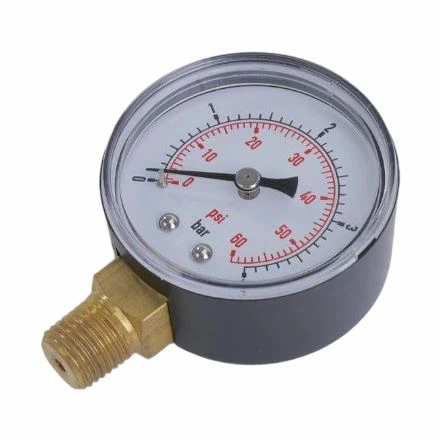
The 1.5" Water Pressure General Pressure Gauge is designed specifically for measuring water pressure. It may have different material compositions to ensure compatibility with water and prevent corrosion.
The Ordinary Pressure Gauge is a more general - purpose gauge that can be used in a variety of applications. It often has a simple design and is made with materials that balance cost and performance.
The General Air Pressure Gauge is used to measure air pressure. The materials used in it are selected to handle the specific properties of air, such as its low density and relatively low corrosiveness compared to some other fluids.
The Steel Chrome Plated Presssure Gauge has a steel body with a chrome - plated finish. This gives it a more rugged appearance and better corrosion resistance in certain situations, but it also has different mechanical properties compared to a brass pressure gauge.
Why Choose a Brass Pressure Gauge?
Brass pressure gauges have several advantages. First, as I mentioned earlier, brass is corrosion - resistant. This makes it suitable for use in a wide range of environments, including those with mild chemicals or moisture. Second, brass is a relatively soft metal, which means it can be easily machined and formed into complex shapes. This allows for the production of high - precision pressure gauges.
Another advantage is the cost. Brass is more affordable than some other metals, such as stainless steel, while still providing good performance. This makes brass pressure gauges a cost - effective solution for many applications, from small - scale industrial uses to home - based projects.
Let's Talk Business!
If you're in the market for a high - quality pressure gauge, whether it's a brass one or one of the other types I mentioned, we've got you covered. We have a wide range of pressure gauges to meet your specific needs. Whether you need a gauge for measuring water pressure, air pressure, or general industrial applications, we can provide you with the right product.
If you have any questions about the material composition, the performance, or the application of our pressure gauges, feel free to reach out. We're always here to help you make the best choice for your project. So, don't hesitate to get in touch and start a procurement discussion. We're looking forward to working with you!
References
- ASM Handbook Volume 2: Non - Ferrous Alloys and Special - Purpose Materials
- Pressure Measurement Handbook


