


What is the response time of a medical pressure gauge with a luminous dial?
As a supplier of Medical Pressure Gauge Luminous Dials, I've encountered numerous inquiries from medical professionals and equipment manufacturers regarding the response time of these crucial devices. Understanding the response time of a medical pressure gauge with a luminous dial is essential for ensuring accurate and timely pressure measurements in various medical applications.
Importance of Response Time in Medical Pressure Gauges
In the medical field, precision and speed are of the essence. Whether it's monitoring blood pressure, measuring the pressure in medical balloons, or regulating the pressure in anesthesia delivery systems, accurate and rapid pressure readings can significantly impact patient outcomes. A medical pressure gauge with a short response time can quickly detect changes in pressure, allowing medical staff to make informed decisions promptly.
For instance, in interventional cardiology procedures, Balloon Inflation Pressure Gauges are used to inflate and deflate balloons during angioplasty. These gauges need to respond rapidly to changes in pressure to ensure that the balloon is inflated to the correct pressure and deflated safely. A slow response time could lead to over - inflation or under - inflation of the balloon, which may cause complications such as vessel damage or inadequate treatment.
Factors Affecting the Response Time
Several factors can influence the response time of a medical pressure gauge with a luminous dial.

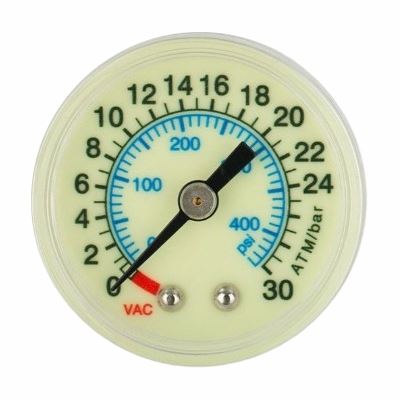
1. Sensor Technology
The type of pressure sensor used in the gauge plays a crucial role in determining its response time. Piezoelectric sensors, for example, are known for their fast response times. They work by generating an electrical charge in response to pressure changes. These sensors can detect pressure variations almost instantaneously, making them suitable for applications where rapid response is required.
On the other hand, some mechanical sensors may have a slower response time. Bourdon tube sensors, which are commonly used in pressure gauges, rely on the mechanical deformation of a tube to measure pressure. The time it takes for the tube to deform and the gauge to register the pressure change can be relatively longer compared to piezoelectric sensors.
2. Dial Design and Construction
The design and construction of the luminous dial can also affect the response time. A well - designed dial with a low - inertia movement can respond more quickly to pressure changes. The materials used in the dial and its components, such as the pointer and the scale, can impact the overall responsiveness of the gauge. For example, a lightweight pointer made of a low - density material will require less force to move, allowing it to respond faster to pressure variations.
3. Fluid or Gas Medium
The medium whose pressure is being measured can influence the response time. Gases generally allow for faster pressure transmission compared to liquids. When measuring the pressure of a gas, the molecules can move more freely and transmit pressure changes more rapidly. In contrast, liquids have higher viscosity, which can slow down the transmission of pressure waves. For example, when measuring the pressure of a viscous medical fluid, the gauge may take longer to respond to pressure changes compared to measuring the pressure of a gas.
Measuring the Response Time
To accurately measure the response time of a medical pressure gauge with a luminous dial, specialized testing equipment is often used. A step - change in pressure is applied to the gauge, and the time it takes for the gauge to reach a certain percentage (usually 90% or 95%) of the final pressure value is recorded.
This testing is typically carried out in a controlled laboratory environment to ensure consistent and accurate results. The results are then analyzed to determine if the gauge meets the required response time specifications for its intended medical application.
Applications and Response Time Requirements
Different medical applications have different response time requirements for pressure gauges.
1. Blood Pressure Monitoring
In blood pressure monitoring, the response time of the pressure gauge needs to be fast enough to accurately capture the systolic and diastolic blood pressure values. A typical blood pressure cuff uses a pressure gauge to measure the pressure exerted on the artery. The gauge should be able to respond quickly to the rapid changes in pressure that occur during each heartbeat. A response time of a few milliseconds is often desirable to ensure accurate readings.
2. Medical Balloon Applications
For 30 ATM Pressure Gauges for Medical Balloons, the response time is critical. These gauges are used to control the inflation and deflation of medical balloons in procedures such as angioplasty and endoscopy. The gauge must respond rapidly to pressure changes to ensure the safe and effective use of the balloon. A response time of less than a second is usually required to meet the safety and performance standards in these applications.
3. Anesthesia Delivery Systems
In anesthesia delivery systems, pressure gauges are used to monitor the pressure of anesthetic gases and vapors. The response time of these gauges is important to ensure that the correct amount of anesthetic is delivered to the patient. A slow response time could lead to inaccurate dosing, which may have serious consequences for the patient. A response time in the range of tens of milliseconds is often necessary for these applications.
Our Offerings as a Supplier
As a supplier of Medical Pressure Gauge Luminous Dials, we understand the importance of response time in medical applications. Our gauges are designed and manufactured using the latest sensor technologies and high - quality materials to ensure fast and accurate response times.
We offer a wide range of medical pressure gauges, including Balloon Inflation Pressure Gauges, 30 ATM Pressure Gauges for Medical Balloons, and General Medical Pressure Gauges. Each gauge undergoes rigorous testing to ensure that it meets the strictest quality and performance standards.
Our team of experts is available to provide technical support and guidance on selecting the right pressure gauge for your specific medical application. We can help you understand the response time requirements and recommend the most suitable gauge based on your needs.
Conclusion
The response time of a medical pressure gauge with a luminous dial is a critical factor in ensuring accurate and timely pressure measurements in medical applications. By understanding the factors that affect response time, measuring it accurately, and selecting the right gauge for the specific application, medical professionals and equipment manufacturers can ensure the safety and effectiveness of their medical procedures.
If you are in the market for high - quality medical pressure gauges with fast response times, we invite you to contact us for more information and to discuss your procurement needs. Our team is ready to assist you in finding the perfect solution for your medical pressure measurement requirements.
References
- "Medical Instrumentation: Application and Design" by John G. Webster
- "Pressure Measurement in the Medical Field" - Journal of Medical Engineering and Technology
- Manufacturer's specifications and technical documentation for medical pressure gauges.


